The Rise of Personalization: How Sublimation Mug Photo Templates Are Reshaping Custom Gifting
In an era dominated by the experience economy, the value of a physical product often lies in its ability to tell a story. We have moved past the age of generic, mass-produced merchandise. Today’s consumers—ranging from entrepreneurs building niche brands to freelancers seeking unique client gifts—are demanding hyper-personalization. This shift has placed immense pressure on creators to produce high-quality, customized goods rapidly and efficiently. At the intersection of this demand and modern manufacturing technology lies a transformative tool for the printing industry: Sublimation Mug Photo Templates. These digital assets are not merely design files; they are the bridge between raw creativity and professional-grade production, streamlining workflows for creators worldwide.
Understanding the Mechanics of Template-Driven Production
To appreciate the impact of these templates, one must first understand the sublimation process. Sublimation printing involves using heat to transfer dye onto materials such as fabric, plastic, or specially coated ceramics. Unlike standard printing, where ink sits on top of the surface, sublimation dyes bond with the material at a molecular level, resulting in images that are durable, vibrant, and resistant to peeling or fading. However, the precision required for this process is unforgiving. A slight misalignment on a cylindrical object like a mug can result in a lopsided design or visible seams.
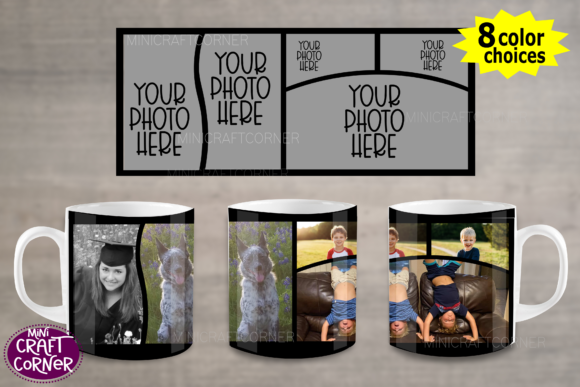
This is where the utility of a dedicated template becomes undeniable. A high-quality PNG sublimation wrap, specifically designed for an 11 oz mug, removes the guesswork from the equation. By providing a pre-measured canvas (typically 8.5 x 3.5 inches), these templates ensure that the "safe zones" for printing are respected. The inclusion of "holes" for pictures in these templates represents a sophisticated approach to design layering. It allows the creator to place a photograph behind the graphic element, creating a dynamic, multi-dimensional look that would otherwise require advanced knowledge of masking and clipping paths in software like Adobe Photoshop or CorelDRAW.
The "Hole" Method: A Workflow Revolution
The specific functionality of placing a picture behind a "picture hole" in a PNG file is a game-changer for workflow efficiency. Traditionally, creating a custom mug design involved manually measuring the curvature of the mug, adjusting the image to account for the distortion caused by the curve, and meticulously cropping the subject of the photo to fit within a decorative border. This process is time-consuming and prone to error.
Modern sublimation templates streamline this by utilizing transparent areas within the PNG file. This technique allows the underlying photograph to show through specific shapes—whether circular, heart-shaped, or abstract silhouettes. For the creator, this means the design is already composed; the primary task is simply positioning the subject's face or the focal point of the image within that designated area. This "drag-and-drop" methodology drastically reduces production time, which is a critical metric for small business owners operating on tight margins or fulfilling bulk orders.
Adapting to Market Trends: The Demand for Abstract and Artistic Flair
Consumer tastes are evolving. While a simple rectangular photo pasted onto a white mug served its purpose a decade ago, today’s buyer is looking for artistry. The market is seeing a surge in demand for designs that incorporate abstract shapes, vintage aesthetics, and complex graphics. The specifications of modern templates reflect this trend. By offering abstract holes rather than standard rectangles, these templates allow even a novice designer to create a product that looks professionally curated.
Furthermore, the requirement for users to know how to crop a photo correctly speaks to a broader industry trend: the democratization of design skills. While technical help is often not provided by template sellers, the ecosystem has responded with resources. The inclusion of tutorials, such as those for Inkscape (a popular free vector graphics editor), and the vast library of educational content on YouTube, empowers users to learn on the job. This self-service model fosters a community of skilled creators who are constantly upskilling, moving from hobbyists to professional entrepreneurs.
Technical Precision: The Role of 300 DPI and File Quality
One cannot discuss sublimation without addressing the technical specifications that ensure quality. A common pitfall in the print-on-demand world is the "pixelated print," a result of using low-resolution images. The industry standard for high-quality printing is 300 DPI (dots per inch). When a template is designed at this resolution, it ensures that the intricate details of the borders, frames, and abstract shapes remain sharp and crisp when heat-pressed onto ceramic.
For professionals, this technical reliability is non-negotiable. A freelance photographer selling prints or a marketer creating corporate swag cannot afford to deliver a product that looks blurry or cheap. The use of high-resolution PNG files ensures that the transparency channels are clean—meaning the edges of the "picture holes" are sharp rather than jagged. This attention to digital detail translates directly to the perceived value of the final physical product.
Practical Applications for Entrepreneurs and Marketers
The versatility of sublimation mug photo templates extends far beyond simple family gifts. For entrepreneurs, these templates are a gateway to scalable product lines. Consider the following practical applications:
- Wedding and Event Favors: Event planners and brides are constantly seeking personalized memorabilia. Using these templates, a small business can offer "Photo-in-Design" favors where guest photos are incorporated into a thematic mug design, all produced with consistent quality.
- Corporate Branding: Marketers understand the power of swag. A generic company mug often ends up in the back of a cabinet. However, a mug featuring an employee’s photo integrated into a celebratory "Employee of the Month" or "Work Anniversary" template becomes a cherished keepsake.
- E-commerce Niches: Platforms like Etsy and Shopify are filled with creators selling "Grandma Mugs" or "Pet Memorial Mugs." The ability to easily resize dimensions in an editing program allows sellers to adapt one template for 11 oz mugs, 15 oz mugs, or even travel tumblers, maximizing the utility of a single digital asset.
Software Agnostic and Accessible
Another significant advantage of the PNG format is its universality. Unlike proprietary file types that lock users into expensive software ecosystems, PNG files can be opened and edited in virtually any graphic design software. Whether a creator prefers the industry-standard Adobe suite, the open-source power of GIMP and Inkscape, or even user-friendly platforms like Canva, the template remains accessible.
This accessibility lowers the barrier to entry for new creators. It allows a freelancer to test the waters of the sublimation market without investing thousands of dollars in software before they have a product to sell. The ability to easily change dimensions if needed further future-proofs the asset; as market trends shift toward different mug sizes or styles, the digital template can be adapted rather than discarded.
The Future of Customization
As we look toward the future of the printing industry, the role of intelligent templates will only grow. We are moving toward a reality where personalization is not just a feature but an expectation. Tools that simplify the complex geometry of 3D objects—like the curve of a mug—will be essential for maintaining speed and quality.
Sublimation Mug Photo Templates serve as a prime example of how digital tools are solving physical-world manufacturing challenges. They encapsulate the shift toward a creator economy where the power of production is in the hands of the individual. By combining high-resolution technical specifications (300 DPI) with user-friendly design features (transparent photo holes), these templates empower professionals to deliver products that resonate emotionally with consumers.
In conclusion, the integration of these templates into a creative workflow is more than a matter of convenience; it is a strategic business decision. It allows for the consistent production of high-quality, personalized goods that meet the exacting standards of the modern consumer. Whether you are a seasoned professional looking to optimize your production line or a budding entrepreneur entering the world of custom goods, mastering the use of sublimation templates is a vital step in staying relevant in a rapidly evolving market.