Small Business Card Bundle: Canva Templates for Customer Retention and Referrals
Practical Tools for Everyday Customer Interaction
For small business owners, the moments following a sale are critical. They represent an opportunity to transform a transaction into a relationship. A well-designed thank you card, a loyalty incentive, or a referral request can significantly impact repeat business and customer acquisition. However, creating these materials from scratch requires time, design skill, and consistency that many entrepreneurs lack. This is where a structured Small Business Card Bundle using Canva Templates offers a practical solution. It provides a cohesive set of editable materials designed to streamline post-purchase communication and encourage customer engagement.
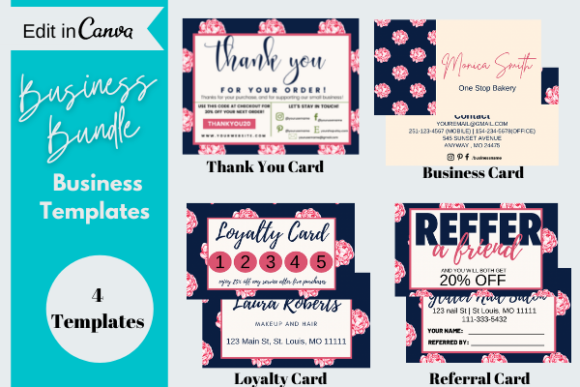
The bundle in question includes four specific items: a Thank You Card, a Business Card, a Loyalty Card, and a Refer-a-Friend Card. Each template is pre-designed in Canva, the popular online graphic design platform. The core value proposition is efficiency and professionalism. Instead of commissioning a designer or struggling with complex software, a business owner can access a set of templates that share a unified aesthetic. They simply input their own information, adjust colors to match their brand, and print the cards for immediate use. This approach bridges the gap between a generic, impersonal receipt and a custom, branded customer experience.
Analyzing the Components and Their Strategic Use
Understanding the purpose of each card in the bundle helps illustrate its practical application. The Thank You Card, sized at 5.5 x 4.25 inches, serves as the primary gesture of appreciation. It’s more than a polite note; it’s a tangible touchpoint. Including a specific message and perhaps a small, immediate discount can soften the post-purchase buyer’s remorse and reinforce a positive brand perception. The larger size gives it presence, making it less likely to be immediately discarded.
The Business Card (3.5 x 2 inches) is a standard networking tool, but its inclusion here ensures brand consistency. When a customer receives a thank you card and a business card from the same visual family, it reinforces brand recognition. The Loyalty Card is a direct tool for retention. By offering a percentage off on a future purchase after a certain number of visits or spend, it incentivizes the customer to return rather than explore competitors. Finally, the Refer Card turns satisfied customers into advocates. By providing a clear mechanism—often with a unique code or a simple "mention my name" instruction—you systematize word-of-mouth marketing, which remains one of the most trusted forms of advertising.
Real-World Usability and Customization
The effectiveness of this Small Business Card Bundle hinges on its usability within Canva. The platform’s drag-and-drop interface is generally accessible, even for those with minimal design experience. The templates are editable, meaning you can change fonts, rearrange elements, and, most importantly, alter the color palette to align with your existing branding. This flexibility is crucial. A bakery with a pastel theme and a tech consultant with a sleek, dark palette can both use the same template structure while achieving entirely different looks.
However, the quality of the final product depends on the user’s input. A cluttered layout or poor color choices can undermine the template’s professional intent. It’s advisable to keep modifications minimal and purposeful. The bundle provides a strong starting point; over-customization can sometimes lead to inconsistency. The instruction to "add your own information" is straightforward, but users should also consider the messaging. The discount percentage on the loyalty or refer card should be calculated to be attractive to customers while still financially viable for the business.
Who Benefits Most from This Bundle?
This type of resource is particularly valuable for specific segments of small business owners. Service-based professionals like consultants, photographers, tutors, and freelancers can use these cards to add a polished, personal touch to their client onboarding and offboarding process. Product-based businesses, especially those selling at local markets, pop-up shops, or through e-commerce, can include them in shipped orders or hand them out at point-of-sale. The cards serve as a physical reminder of an online interaction.
It is also highly useful for new businesses building their initial customer base. The referral card is a low-cost method to generate new leads. Similarly, businesses in competitive local markets—such as salons, cafes, or boutique retail shops—can use the loyalty card to foster habitual patronage. The bundle is less about high-level marketing strategy and more about executing the foundational, tactile elements of customer relationship management efficiently.
Practical Considerations and Potential Limitations
While the bundle offers clear advantages, a balanced assessment must note its limitations. The value is entirely dependent on the user’s follow-through. Printing at home can yield variable quality; for a truly professional feel, using a print shop with heavier cardstock is recommended, which adds cost. The templates are digital assets, not physical products, so the user must handle production.
Furthermore, the bundle assumes a certain business model. It’s designed for businesses with a direct, transactional relationship with customers. It may be less relevant for B2B companies or those with very long sales cycles. The referral mechanism, while simple, requires a degree of customer goodwill and engagement that may not exist in all scenarios. The templates provide the tool, but the business owner must cultivate the relationship that makes the tool effective.
Integrating the Bundle into a Broader Workflow
For maximum impact, these cards should not exist in isolation. They are most effective as part of a larger customer journey. For example, the Thank You Card could include a QR code linking to a feedback survey or a social media page. The Loyalty Card could be tracked using a simple spreadsheet or a dedicated app. The Refer Card’s success can be measured by tracking how many new customers mention the referral source.
The long-term value lies in creating a repeatable system. Once the templates are customized, they can be reprinted as needed, ensuring every customer receives the same branded experience. This consistency builds trust and professionalism. Over time, the data gathered—which discount levels drive the most repeat business, which referral incentives are most effective—can inform broader marketing decisions.
In conclusion, a Small Business Card Bundle of Canva Templates is a practical, time-saving asset for entrepreneurs focused on building customer loyalty and generating referrals. It democratizes professional design, providing a structured framework that can be adapted to various brand identities. Its strength lies in its specificity—it solves for the common need of tangible, post-purchase engagement tools. For the small business owner who values efficiency and consistency in their customer interactions, it represents a worthwhile investment of time and a modest printing budget. The key to success is viewing the templates not as an end product, but as the starting point for a more intentional and personal customer communication strategy.