Optimizing Faith-Based Productivity: The Role of Editable Bible Study Prayer Journal Templates in Modern Spirituality
The Convergence of Digital Design and Spiritual Discipline
In the contemporary landscape of personal development and lifestyle management, the intersection of technology and spirituality has become a focal point for creators and professionals alike. The traditional practice of journaling, once confined to static paper products, has evolved into a dynamic, customizable experience driven by digital tools. Central to this evolution are Bible Study Prayer Journal Templates. These resources represent more than just printed pages; they are a bridge between deep theological reflection and the modern demand for flexible, aesthetically pleasing organizational systems.
For the entrepreneur, the creative professional, or the dedicated ministry leader, time is a finite resource. The modern believer is no longer content with one-size-fits-all devotional guides. Instead, there is a growing market for tools that facilitate personalization without requiring graphic design expertise. This shift has popularized Editable and Printable Journal Templates, allowing users to curate a spiritual practice that fits seamlessly into their busy, productivity-focused lives. By leveraging platforms like Canva, these templates empower users to take ownership of their spiritual growth, mirroring the autonomy they seek in their professional endeavors.
Anatomy of a Modern Spiritual Workflow
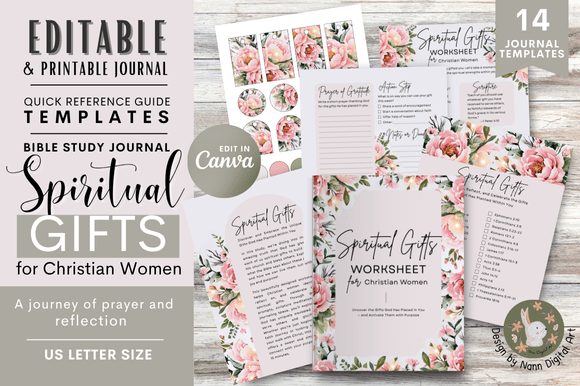
Understanding the utility of a comprehensive journal requires looking at its components not just as features, but as solutions to specific workflow challenges. A prime example of this comprehensive approach is the “Spiritual Gifts Worksheets for Christian Women with prompts Bible Study and Reading Plan Reflection and Prayer Journal.” This type of product addresses the multifaceted nature of faith, combining education, planning, and introspection into a single cohesive system.
The inclusion of Spiritual Gifts Worksheets indicates a trend toward self-discovery within the Christian community. Professionals are increasingly aware of their strengths in the workplace; applying this same diagnostic approach to spiritual life allows for more effective service and ministry. When combined with a Reading Plan Reflection, the journal transforms from a passive repository of thoughts into an active engagement tool. It guides the user through a structured intellectual and emotional process, ensuring that the consumption of scripture leads to actionable spiritual growth.
Furthermore, the Prayer Journal component serves as the anchor of the daily routine. In a high-stress professional environment, the act of writing down prayers has been shown to reduce anxiety and increase focus. By providing structured prompts, these templates eliminate the "blank page syndrome," allowing users to dive immediately into meaningful dialogue with God rather than wondering what to write. This structured approach to spirituality appeals to the logical, efficiency-driven mindset of modern entrepreneurs and freelancers.
The Flexibility of the "Fourteen Devotional Journal Template"
One of the most significant advancements in this niche is the move toward manageable, modular timeframes. The concept of a Fourteen Devotional Journal Template reflects a broader consumer preference for short-term, high-impact challenges. Just as business professionals often work in two-week sprints to maximize productivity, spiritual practitioners are adopting similar cadences.
A 14-day structure is psychologically accessible. It is long enough to establish a habit but short enough to maintain high engagement levels. This timeframe allows for a deep dive into a specific topic—be it patience, leadership, or gratitude—without the overwhelm of a year-long commitment. For creators and marketers, this modularity offers a distinct advantage: it allows for the rotation of content and themes, keeping the practice of journaling fresh and relevant to current life circumstances.
The ability to Edit in Canva is the technological catalyst that makes this flexibility possible. Canva has democratized design, turning consumers into creators. When a user purchases a template that is Editable in your Canva account, they are not just buying a static PDF; they are buying a seed that can grow into a personalized digital or physical ecosystem. Users can adjust fonts to match their aesthetic, modify color palettes to evoke specific moods, or even add their own branding elements if they are ministry leaders looking to create resources for their community.
Industry Trends: The Rise of the "Print-at-Home" Economy
The distribution method of these templates speaks volumes about current market trends. The delivery mechanism—typically a INCLUDED 1 ZIP file – PDF file with the Canva link to edit journal templates—caters to the instant-gratification economy while supporting the sustainable "print-at-home" movement. Professionals value immediacy; the ability to access a product instantly allows them to integrate it into their workflow immediately.
The format standard of US letter size 8.5″ x 11″ is a pragmatic choice that balances professional presentation with accessibility. It fits standard home printers and readily available binders, reducing friction for the user. This aligns with the broader trend of hybrid workflows, where digital planning intersects with physical manifestation. Many high-performers prefer the tactile experience of writing on paper for retention and focus, yet they desire the clean, modern aesthetic that digital design provides. Editable templates bridge this gap perfectly.
Moreover, the instruction to Simply select print only the pages of your choice to use as needed highlights a critical shift in consumer expectations: the demand for à la carte utility. Users reject the rigidity of pre-bound books where half the pages might go unused. Instead, they prefer a modular library approach. They might print the Bible Study pages for Sunday morning, the Prayer Journal pages for the week, and the Spiritual Gifts Worksheets for a quarterly review. This "print-on-demand" mindset reduces waste and increases the perceived value of the product.
Addressing the Aesthetic and Technical Demands
In the visual economy of social media and digital branding, aesthetics matter. A journal is no longer just a tool; it is often a prop for content creation or a reflection of personal brand identity. The note regarding Colors may vary slightly depending on the monitor is a standard but necessary technical disclaimer that underscores the reality of digital-to-physical translation. It acknowledges the diversity of hardware in the market, from high-end retina displays to standard office monitors, and sets a professional expectation of color fidelity.
For the target audience of professionals, creators, and entrepreneurs, the visual quality of their tools can impact their motivation to use them. A well-designed, Editable and Printable Journal Template feels premium. It elevates the act of journaling from a mundane chore to a curated experience. The ability to customize these templates ensures that the final product feels bespoke, even if the underlying structure is templated. This is a crucial psychological factor in user retention; people are more likely to stick with a spiritual discipline if the tools they use bring them joy and satisfaction.
Operational Realities and Consumer Trust
The business model behind these digital products also reflects broader shifts in e-commerce and consumer behavior. The policy note—I don’t accept returns, exchanges, or cancellations. But please contact me if you have any problems with your order—is a standard in the digital goods marketplace. It highlights the unique nature of non-tangible assets.
However, the accompanying offer of support is vital for building trust. In a market where digital products can sometimes feel impersonal, the assurance of customer service bridges the gap between a transaction and a relationship. For the professional user, knowing that the Canva link works and that support is available removes the risk from the purchase. It allows them to focus on the application of the tool rather than the logistics of the acquisition.
This business dynamic encourages a culture of self-sufficiency among users. By providing the tools and the link, the creator empowers the user to handle their own production. This resonates with the entrepreneurial spirit—taking raw materials (the template) and refining them into a finished product (the personalized journal) through one's own effort and creativity.
Conclusion: A Tool for Intentional Living
Ultimately, the popularity of resources like the “Spiritual Gifts Worksheets for Christian Women with prompts Bible Study and Reading Plan Reflection and Prayer Journal” is driven by a universal desire for intentionality. In a world characterized by digital noise and constant distraction, the act of sitting down with a curated set of prompts and a physical pen is a form of rebellion against chaos.
These templates offer a structured path to spiritual clarity. They provide the scaffolding necessary to build a robust devotional life, accommodating the busy schedules of working professionals while honoring the depth required for genuine spiritual growth. Whether utilized as a digital journal on a tablet or printed and bound at home, these templates are more than just paper—they are a framework for a life of purpose, reflection, and faith-driven productivity. As the market for digital lifestyle tools continues to expand, the integration of spiritual wellness into daily workflows will remain a key trend, driven by the flexibility and accessibility of editable, printable solutions.