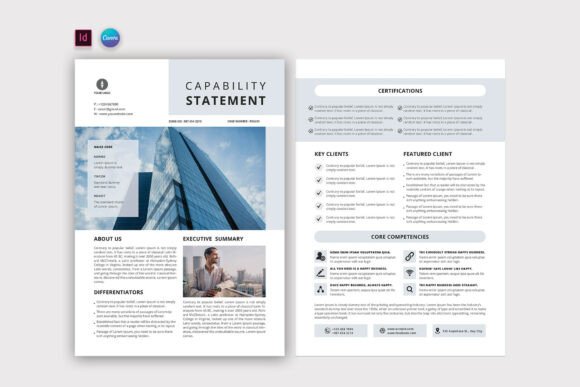
Capability Statement Templates: A Strategic Guide
In competitive business environments, making a strong first impression is not just an advantage—it is a necessity. Whether you are bidding for a government contract, pitching to a corporate partner, or simply trying to stand out in a crowded market, a well-crafted document that outlines your company's strengths is essential. This is where a professional capability statement becomes your most powerful tool. It serves as a concise, impactful summary of who you are, what you do, and why you are the best choice for a particular project or partnership.
A capability statement is a one or two-page document that details your company's core competencies, past performance, differentiators, and key business information. Think of it as a resume for your business, designed to quickly communicate value to decision-makers. For many small to medium-sized businesses, freelancers, and agencies, creating this document from scratch can be a daunting task. It requires careful thought about content, layout, and design to ensure it looks professional and communicates clearly. This is precisely why capability statement templates have become an invaluable resource for professionals across industries.
Why a Template is a Smart Starting Point
Using a well-designed template is not about cutting corners; it is about working efficiently and effectively. A template provides a proven structure and a professional aesthetic, allowing you to focus on what truly matters: your content. Instead of spending hours wrestling with design software, aligning text boxes, and choosing fonts, you can invest that time in articulating your company's unique story and strengths. This approach saves significant time and reduces the friction involved in producing high-stakes marketing materials.
Professional templates, particularly those designed with customization in mind, offer a framework that ensures all critical information is presented logically. They guide you through sections like company overview, core competencies, past performance, differentiators, and contact details. This structure helps prevent you from overlooking key selling points and ensures the final document is easy for the reader to scan and understand. For businesses pursuing government contracts, where requirements can be stringent, having a structured and compliant format is especially critical.
Key Features of an Effective Capability Statement Template
Not all templates are created equal. The most useful ones are those that balance professional design with practical flexibility. When evaluating a capability statement template, consider the following features that contribute to a seamless and effective workflow:
- Editable File Formats: The template should be provided in formats that you can easily edit. Common and powerful formats include Adobe InDesign (INDD and IDML files) and Canva. InDesign offers deep control for those familiar with professional design software, while Canva provides a user-friendly, browser-based alternative for those without advanced skills. Having both options, as seen in some comprehensive template packages, ensures accessibility for everyone.
- Print and Digital Readiness: A great template should be optimized for both print and digital sharing. Look for features like CMYK color mode for accurate print reproduction, proper bleed settings (e.g., 0.125 inches), and standard paper sizes like A4 and US Letter. This dual readiness means you can produce a crisp, professional PDF for email and a high-quality printed version for meetings and trade shows without any additional adjustments.
- Clear Customization Path: The template should come with clear instructions. Whether it is a PDF guide, a linked tutorial, or an intuitive design interface, you need to know how to easily replace placeholder text with your own, change colors to match your brand, and insert your logo. Packages that include free font links and detailed setup guides remove common technical hurdles, making the process smooth even for beginners.
- Professional Layout and Typography: The visual hierarchy should guide the reader's eye naturally from the most important information to supporting details. Clean typography, ample white space, and a balanced layout contribute to readability and a professional appearance. A cluttered or poorly typeset document can undermine your credibility, regardless of how good your content is.
Putting Your Template to Work: Practical Applications
The true value of a capability statement template is realized in its application. Here are several scenarios where having a polished, ready-to-go document can make a tangible difference:
- Government Contracting and RFP Responses: Many Request for Proposals (RFPs) require a capability statement as part of the submission. A well-organized document that clearly outlines your past performance, relevant certifications, and specific competencies can help you pass initial screenings and make a compelling case to evaluators. It demonstrates professionalism and preparedness from the outset.
- Corporate Partnership Proposals: When approaching a larger company for a strategic partnership or subcontracting opportunity, a capability statement acts as your formal introduction. It allows their procurement or business development team to quickly assess your suitability and understand the value you bring to their supply chain. A generic company brochure often lacks the focused detail needed for this purpose.
- Networking and Trade Shows: At industry events, you meet numerous potential clients and partners in a short time. A concise, one-page capability statement is an excellent leave-behind. It is far more likely to be reviewed than a lengthy brochure because it respects the recipient's time while delivering all necessary information.
- Sales Enablement: Equip your sales team with a standardized document that they can quickly personalize for different prospects. This ensures consistent messaging about your company's strengths while allowing for customization to address specific client pain points or industry requirements.
Choosing the Right Template for Your Needs
When selecting a template, consider your primary use case and your team's technical skills. If your business regularly submits proposals to government agencies, look for templates that are specifically structured to highlight sections like NAICS codes, past contract performance, and security clearances. If your focus is on creative partnerships, a template with more visual space for portfolios or case studies might be more appropriate.
Also, think about the longevity of the template. A design that is overly trendy might look dated in a year. A classic, clean layout will have a longer shelf life and can be easily updated as your business evolves. Furthermore, consider the support offered by the template provider. Access to help if you encounter a technical issue can save you valuable time and prevent frustration.
While templates provide a fantastic foundation, remember that the content is king. The most beautifully designed document will fall flat if the writing is vague or generic. Use the template as a guide to articulate specific achievements, quantify results where possible (e.g., "increased client efficiency by 30%"), and clearly state what sets you apart from competitors. The template handles the presentation; you must provide the compelling substance.
A Note on Limitations and Customization
It is important to view a capability statement template as a starting framework, not a final product. Every business is unique, and you may need to adjust the sections to best tell your story. For instance, if your company has won notable industry awards, you might want to create a dedicated section for them. If your differentiator is a proprietary process, you may need to expand that section with a simple diagram or flowchart.
Furthermore, while a template ensures a professional look, it does not replace strategic thinking. Before you start filling in the blanks, take time to define your target audience for the statement. What are their specific needs and pain points? How does your company solve their problems better than anyone else? Tailoring your content to address these questions directly will make your capability statement far more effective than a generic version, no matter how good the design.
Ultimately, investing in a high-quality, professional, and customizable capability statement template is an investment in your business's growth. It streamlines the creation of a critical business document, ensures a polished presentation, and frees you to focus on crafting a message that resonates with your ideal clients and partners. By combining a strong template with thoughtful, specific content, you create a powerful asset that opens doors and builds credibility in competitive markets.